Alex Tabarrok recently posted something on X that stopped me in my tracks:
“I bought a Tesla. The choice was simple; do I want a car or do I want a car + driver.”
He was referring to Tesla’s Full Self-Driving technology. His framing captures something much bigger and more interesting.
For most of human history, having a driver was an extraordinary luxury. Kings and queens traveled in carriages driven by someone else. With the arrival of automobiles, chauffeurs became available to the extremely wealthy. Even today, employing someone to drive you around remains a conspicuous sign of wealth.
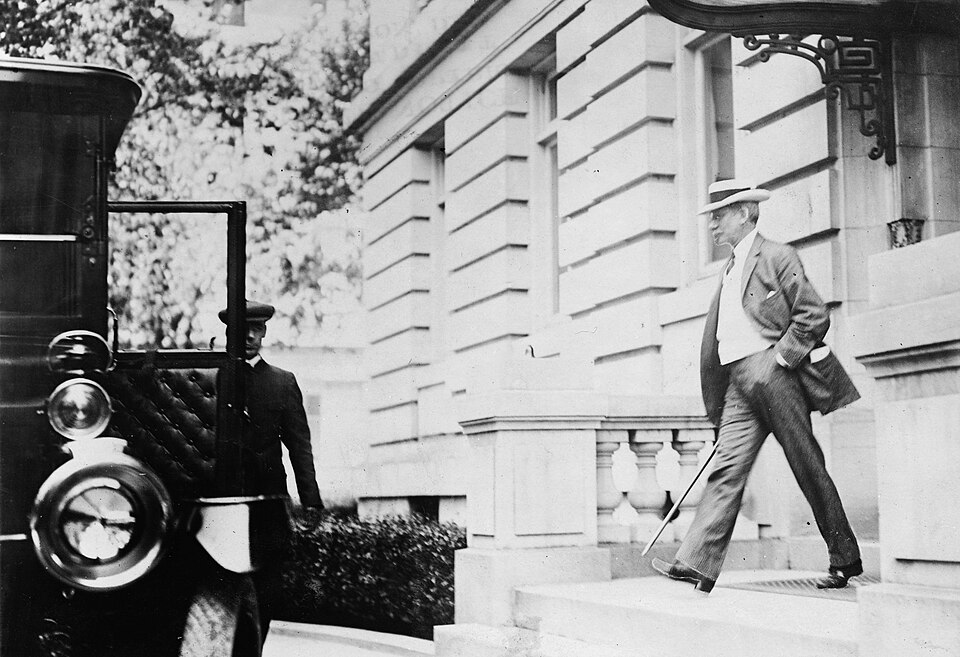
Yet the free market has been steadily working on the problem. Now an ordinary person can buy a car that increasingly does the driving for them. There’s no chauffeur waiting outside your house, no salary to pay and no need to find somewhere for Jeeves to sleep. The driver is software.
This is one of the most remarkable—and egalitarian—features of economic progress. The free market has a habit of taking things once reserved for kings and the nobility and turning them into things the rest of us barely notice.
Virginia Postrel and Charles C. Mann have been exploring this phenomenon in their excellent Everyday Abundance podcast. Their episode on music provides another wonderful example.
Music was once something you could hear only when someone was there to perform it. A king could summon musicians to court and the wealthy could hire them for parties. Ordinary people had far fewer opportunities, perhaps at church, a festival or around a family piano.
Today I can be walking the dog and decide I want to listen to Mozart, the Rolling Stones or a live recording of a New Zealand band from 1982. Within seconds it is playing through headphones that sound better than almost anything available to the wealthiest person in the world a few generations ago.
We don’t think of this as astonishing because it isn’t astonishing anymore. That may be the greatest compliment we can pay economic progress.
The same story plays out all over our homes. For centuries, washing clothes involved backbreaking physical labor. If you belonged to the nobility, naturally, you didn’t do it yourself. Someone else did it for you.
Today I throw clothes into a machine, pour in a little detergent and press a button. In effect, I have a servant dedicated to washing my clothes. I have another washing my dishes, another keeping my food cold and another heating my house. One cleans my floors and yet another makes coffee every morning.
None asks for a day off.
Perhaps the most extraordinary example isn’t sitting in our homes, but in our pockets.
For much of human history, information was scarce and jealously guarded. Before the printing press, books had to be copied by hand and collections of them were largely confined to monasteries, universities, royalty and the very wealthy. The printing press began democratizing knowledge, but books remained expensive for centuries.
Even within my lifetime, access to information could be a mark of affluence. Growing up, only a select few of my friends had a complete set of encyclopedias at home. I found them fascinating. You could pull a volume off the shelf and disappear down a rabbit hole learning about things you hadn’t known existed.
Friends, which now qualifies as a period piece set in the 1990s, had a hilarious episode in which Penn Jillette plays an encyclopedia salesman. Joey can afford only one volume, so he buys “V” and suddenly becomes remarkably knowledgeable about Vesuvius and vivisection.
The joke works because encyclopedias were valuable and expensive. That was less than 30 years ago.
Today billions of people carry something vastly more powerful in their pockets. An emperor with the greatest library in the world couldn’t access a fraction of what an ordinary teenager can while waiting for the bus.
Food provides another dramatic example. Historically, the wealthy distinguished themselves partly by what they could eat. Spices traveled enormous distances and were expensive. Fresh fruit and vegetables were seasonal. Foods from other parts of the world were genuine luxuries.
Walk into a decent American supermarket today and a middle-class shopper can buy New Zealand lamb, Italian cheese, Colombian coffee, Norwegian salmon, Mexican avocados, Indian spices, French wine and bananas grown somewhere in the tropics. In January.
Kings once sent ships halfway around the world searching for spices. I can have them delivered to my front door this afternoon.
It’s easy to miss what has happened because we tend to measure wealth in dollars rather than experiences. Someone with $100 million can obviously buy all manner of things unavailable to most of us.
But in important ways, the difference between how a billionaire lives and how an ordinary American lives is much smaller than the difference between how an ordinary American lives today and how extraordinarily wealthy people lived in the past.
John D. Rockefeller had servants. He didn’t have Google.
Queen Victoria could summon musicians. She couldn’t summon almost every piece of music ever recorded while sitting on the toilet.
Louis XIV lived in Versailles. He didn’t have air conditioning.
There’s something wonderfully egalitarian about this process. The rich usually get new technologies first because early versions are expensive. But those wealthy early adopters give businesses an incentive to improve their products. Competitors enter, production expands and prices fall.
What begins as a toy for the rich becomes a convenience for the middle class and eventually something so ubiquitous that people complain when it stops working. Automobiles, televisions, air travel, refrigerators, computers and mobile phones have all followed versions of this path.
This doesn’t happen because somebody decides ordinary people deserve the lifestyles of yesterday’s aristocrats. It happens because entrepreneurs have figured out that making our lives better is a pretty good way to get our money.
Tesla, Spotify, Whirlpool and countless others compete for our business, creating a powerful incentive to make things better, cheaper and easier to use. There’s no guarantee Tesla will win the autonomous driving race. Perhaps another company will develop something better. I hope so. That’s the point.
If autonomous driving develops as its proponents expect, having a “driver” may eventually become so ordinary that our children will find it bizarre that we once spent hours gripping a steering wheel ourselves.
We spend a lot of time worrying about who has more than whom, and sometimes those are worthwhile conversations. But focusing only on the distance between rich and poor today can obscure one of the most extraordinary developments in human history.
Things once available only to a tiny sliver of humanity have become available to hundreds of millions—and in many cases billions—of people.
Economic progress hasn’t made everyone equally rich. It has done something more interesting: again and again, it has taken privileges that once distinguished the extraordinarily rich and made them ordinary.
And that process continues. Yesterday’s luxury becomes today’s convenience and, eventually, tomorrow’s expectation.
A couple of hundred years ago, kings and queens lived lives unimaginable to the people they ruled.
Today, more and more of the people they once would have ruled live lives those kings and queens could never have dreamed of.
Leave a Reply
You must be logged in to post a comment.